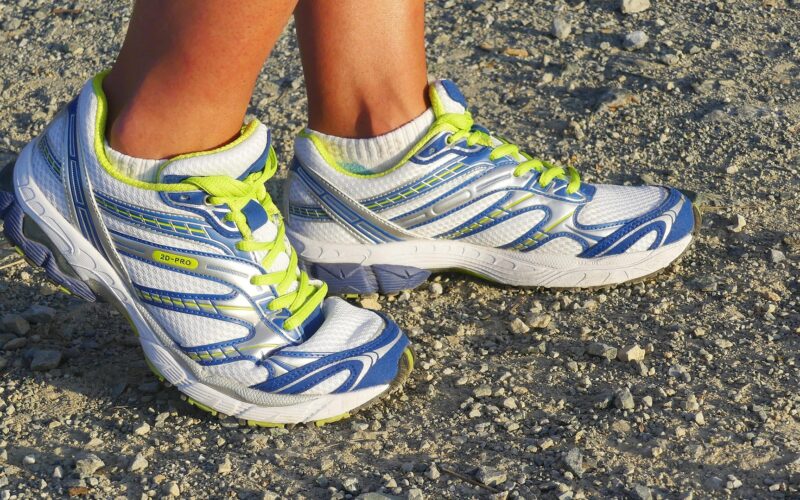
It is often said that running is a solitary sport, but the rise of run clubs and social jogging groups suggests otherwise. Having a training partner provides accountability, safety, and a crucial morale boost during those gruelling long runs. Yet, a common hurdle arises when two enthusiastic runners have significantly different natural paces. One runner might comfortably cruise at 5:00/km, while their partner finds their flow at 6:30/km. This discrepancy often leads to the faster runner feeling under-stimulated or the slower runner feeling demotivated and breathless. Fortunately, pace inequality does not have to spell the end of your training partnership. By adapting your approach and focusing on effort rather than speed, you can bridge the gap effectively.
Master the art of the loop back
The 'loop back' technique is arguably the most popular method for mismatched duos. This strategy allows both runners to maintain their preferred speed without drifting apart permanently. The faster runner surges ahead for a predetermined duration or distance, perhaps running hard for three minutes. Once the time is up, they turn around and jog back to meet the slower runner. They can run together for a brief recovery period before the faster runner surges off again. This transforms a steady run into an interval session for the faster athlete, significantly increasing their total distance volume, while the slower athlete enjoys a consistent, uninterrupted steady state run. It keeps you within shouting distance and ensures the social element remains intact.
Utilise hill repeats as an equaliser
If you want to eliminate the distance gap entirely, hill repeats are the great equaliser. Find a suitable hill with a steady gradient and run up it for a set time, then jog back down to recover. Because you are confined to a specific geographic feature, you are never more than a few hundred metres apart. The faster runner might complete five repetitions in the time it takes the slower runner to complete three or four, but you are effectively training side-by-side. This stationary style of training allows for high-intensity work where both parties can push to their absolute limit without worrying about leaving their partner behind in a strange forest.
Synchronise your recovery and tempo days
Aligning your training calendars can also solve the pacing puzzle. Most training plans involve a mix of high-intensity speed work and low-intensity recovery runs. The magic happens when the faster runner schedules their 'recovery' run on the same day the slower runner schedules their 'tempo' or 'threshold' run. During a recovery run, the faster runner is physiologically required to run slowly to facilitate muscle repair. This suppressed pace often aligns perfectly with the slower runner’s 'hard' effort pace. This convergence allows you to run shoulder-to-shoulder for the entire session, satisfying the specific training stimuli required for both individual plans.
Switch from distance to time
Shifting your metric from distance to time is another psychological win for running duos. Instead of agreeing to run 10 kilometres, agree to run for 50 minutes. You can start at the same location and run in opposite directions on a loop, meeting halfway, or use an 'out-and-back' route. For the out-and-back, you simply run away from your starting point for 25 minutes, then turn around and run back. Regardless of how far each person travels, you will arrive back at the car or café at the exact same moment. This eliminates the anxiety of the slower runner feeling like they are keeping the other person waiting, creating a more relaxed post-run atmosphere.
Introduce cross-training equipment
For rest days or when managing minor injuries, introducing a bicycle into the mix can be a brilliant tactic. The slower runner (or the injured party) can pedal alongside the faster runner. This allows the runner to push the pace as hard as they like, while the cyclist can effortlessly keep up, carry water bottles, and offer encouragement. It is an excellent way to maintain the social connection of training without the physical mismatch. You can even swap roles halfway through if both of you are runners; this constitutes a 'brick' session (bike-run), which is fantastic cross-training for triathlons or general fitness.
Find your shared rhythm
Training effectively as a duo when paces differ requires a shift in perspective. It demands dropping the ego and focusing on the shared experience rather than competitive metrics. By utilising strategies like looping back, hill reps, and schedule alignment, you can turn a pacing mismatch into a dynamic and supportive training environment. The shared miles often feel shorter, and the post-run endorphins are always sweeter when shared. So, lace up your trainers, communicate your plan, and hit the road together—no matter the speed on your watch.